What RNA therapies teach us about our ecosystem’s maturity
About the author
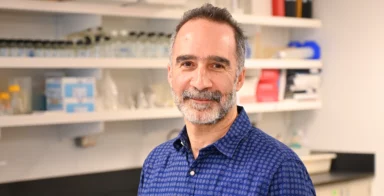
Delphine Davan
Director of Partnerships and Business Development
TransBIOTech
LinkedIn
Biography
With an international background in Europe, the United States, and Canada, Delphine Davan has been acting as a bridge between scientific innovation, business development, and marketing for 20 years and has solid experience in investor relations in the biotech sector. In her role at TransBIOTech, she has been actively contributing to strengthening and promoting Quebec’s life sciences ecosystem, both in Canada and internationally. She holds a master’s degree in Cellular and Molecular Biology from the University of Sciences in Montpellier, France (2003) and an Executive MBA from McGill–HEC Montréal (2018).
This article was originally published in French on LinkedIn on February 4, 2026.
Discussions surrounding RNA therapies have clearly matured in recent years. In 2024, the Quebec government invested more than CAD 20 million (CAD) to position the province as a world leader in RNA therapies and structure the industrial sector. The goal was ambitious: to foster the emergence of companies capable of developing new approaches to treating rare diseases, cancers, and infections.
Since then, science has progressed, technology platforms have diversified, and therapies are beginning to move out of university laboratories to create value through spin-offs or through partnerships and integration within established companies. However, when it comes to raising funds to continue their development, one observation frequently arises: scientific excellence alone is not enough to capture the attention of investors.
Scientific excellence alone is not enough to capture the attention of investors.
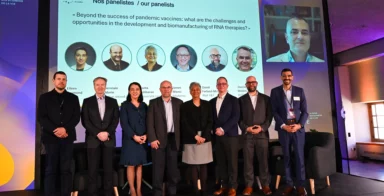
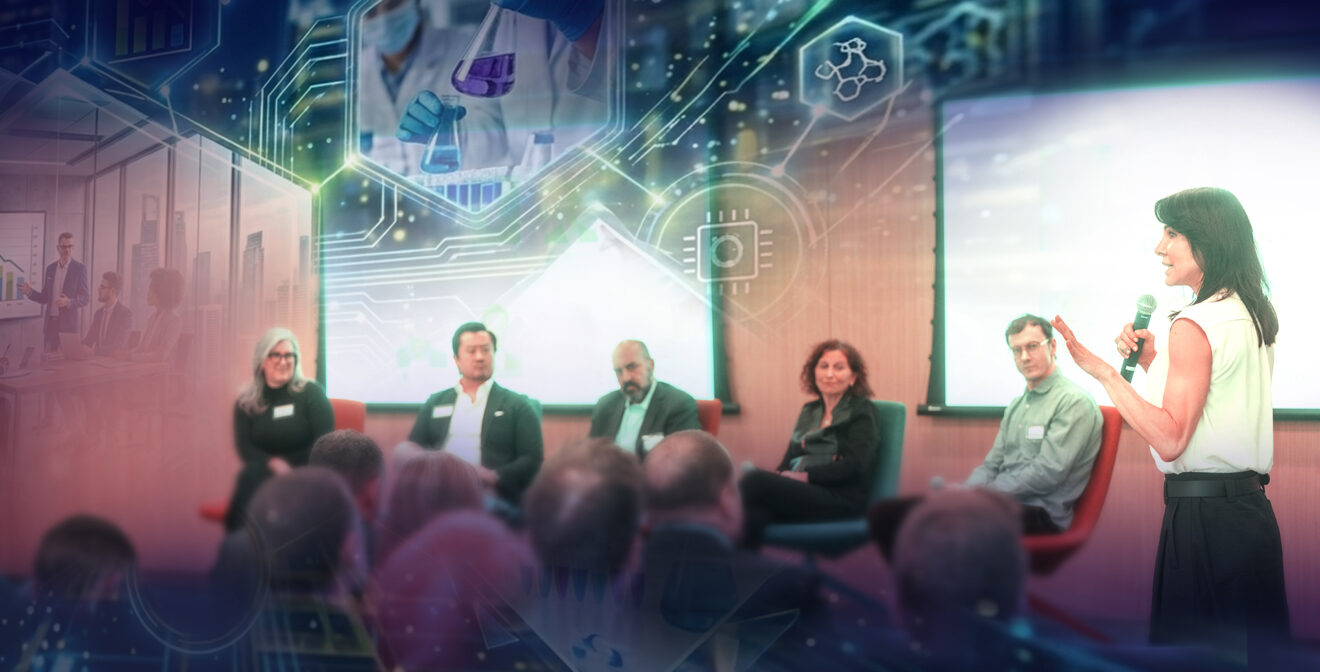
This is precisely why the event organized on January 28, 2026, by Axelys as part of the AReNA initiative was particularly relevant: it offered start-ups the keys to better understanding investor logic, increasing their visibility, and highlighting the richness of Quebec’s RNA therapy ecosystem.
Understanding investment logic, not just criteria
We often talk about “investment criteria”: differentiation, data, team, market. In reality, investors rarely think in terms of fixed lists. Above all, they look for overall consistency and, most importantly, a credible story that will ultimately find a buyer.
Three dimensions recur in a balanced way, often implicitly:
- Science and technology: a detailed understanding of the disease, the relevance of the target, and an informed choice of therapeutic modality.
- Data: robust proof of concept, ideally generated or validated by independent third parties, capable of reducing major uncertainties.
- Strategy: clarity of the development plan, use of capital, and how value will be created at each stage..
In addition to these three dimensions, there is another key cross-cutting factor: the team behind the project. Investors assess the team’s ability to execute, surround themselves with the right expertise, and make structural decisions in a highly uncertain environment.
It is important to remember that investors do not finance technology for its own sake. They invest with an exit strategy in mind, seeking a return on their investment, and this exit is most often linked to the needs and priorities of the pharmaceutical industry, which is called upon to acquire these new technologies. This directly influences the way projects are evaluated, structured, and financed, sometimes very early in their development.
This famous balance reveals something essential: a solid project is not just a good scientific idea. It is a clear trajectory, driven by a credible team and aligned with the industrial realities of the market it is targeting.
A solid project is not just a good scientific idea, it is a clear trajectory.
The importance of the support network and syndication
Beyond the founding team, another factor often underestimated by start-ups is the quality of their strategic support network. Investors closely observe who is involved in the project: scientific partners, serial entrepreneurs, industry advisors, key suppliers, but also players who can strengthen the project’s credibility as it progresses.
This network acts as a signal. It reflects the company’s ability to attract relevant expertise, structure its development, and be part of a collective dynamic rather than an isolated trajectory.
Syndication follows the same logic. With a Series A round in mind, relationships are not built at the last minute. Engaging in dialogue with investors early on, even at a very early stage, is often interpreted as a sign of maturity, but also as an ability to anticipate the next steps in financing and value creation.
In a context where investors rarely invest alone, this ability to bring together partners, expertise, and capital becomes a differentiating factor in its own right.
RNA and competition between modalities: a false debate?
RNA therapies are generating real enthusiasm, but they are evolving in a landscape where other modalities (PROTACs, ADCs, bispecific antibodies) are also advancing rapidly. Rather than seeing this as head-on competition, investors are increasingly thinking in terms of target-modality fit.
RNA may be the best answer for certain very specific indications, but not necessarily for all. This clarity is essential, particularly in oncology, where one question keeps coming up: do we currently have sufficiently predictive models to really accelerate translation to the clinic, or are we sometimes moving forward in overly cautious increments?
Models, data, and de-risking: the foundation of credibility
One message stands out very clearly: good models remain fundamental. Investors continue to place their trust in robust in vivo models.
The use of specialized third parties—CROs, CMC experts, regulatory consultants, and applied research centers such as TransBIOTech—is also seen as a key factor in credibility.
The question is no longer simply “what data do you have?”, but “who generated it, and in what context?”
Artificial intelligence, meanwhile, is already finding its place in due diligence processes and complex data analysis. However, purely AI-based discovery approaches are still, in the eyes of many investors, two to five years away, mainly due to limitations related to the quality and size of available data sets.
A Quebec ecosystem ready to deliver
Quebec now has all the building blocks it needs to achieve success in RNA therapies.
What emerges strongly from these discussions is that Quebec now has all the building blocks necessary to achieve success in RNA therapies: ambitious start-ups, solid technology platforms, recognized expertise, and a growing ability to collaborate to de-risk these new therapies.
However, the value of an ecosystem lies not only in the number of projects, but also in the quality of interactions between its players and their ability to bring to fruition projects that generate value for the economy. In this respect, initiatives such as those led by Axelys and AReNA play an essential role: they build concrete bridges between science, capital, and strategy, and help to structure a common language conducive to the emergence of champions.
Unifying players such as BIOQuébec actively participate in this networking by bringing together scientific, industrial, and financial partners and supporting relationships with government authorities. The CCTT network, and in particular the CCTT members of the Life Sciences Squad, accelerate the development of innovations for clinical use by offering expertise, infrastructure, and access to non-dilutive financing (grants) to emerging companies.
In conclusion, RNA therapies are a powerful lever for demonstrating the collective maturity of our ecosystem. Provided we fully mobilize existing strengths and continue to structure a trajectory between scientific innovation, data, and strategic vision, we have the means to achieve lasting success.
Success will depend on our collective ability to support a coherent, credible, and ambitious narrative, based on solid data and driven by an ecosystem capable of delivering.