Researchers at the Université de Sherbrooke use RNA to correct genetic defects linked to rare neurological diseases

Author: Yassine El Bakkouri
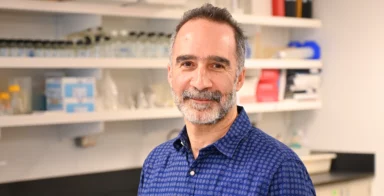
A new study from the laboratory of Dr. Benoit Chabot, a member of the RNA Group at the Université de Sherbrooke and the DePTAQ Network, has been published in Molecular Therapy: Nucleic Acids.
This research provides new insight into the molecular mechanisms underlying certain rare neurological diseases associated with mutations in the POLR3A gene.
These mutations are notably associated with hypomyelinating leukodystrophies, but also with a broader spectrum of neurological and systemic disorders. Understanding how different POLR3A mutations alter gene expression is essential to better elucidate the pathogenic mechanisms underlying diseases linked to this gene.
The researchers investigated whether certain missense mutations could disrupt RNA splicing, a key step in gene expression that converts a precursor messenger RNA (pre-mRNA) into a functional messenger RNA (mRNA). To do so, the team used the CRISPR-dCas13Rx system from the DePTAQ platform to analyze different regions of the POLR3A gene carrying disease-associated mutations.
The results show that approximately 20% of exon regions harboring missense mutations affect RNA splicing, leading to the production of abnormal transcripts. These effects were confirmed using minigene assays.
Importantly, the researchers also identified specific intronic regions that, when targeted by dCas13Rx guide complexes, can correct splicing defects.
Based on these findings, the team developed antisense oligonucleotides (ASOs) derived from the guide RNAs used in the study. These molecules were able to improve correct splicing in human cell lines.
Overall, the results suggest that splicing defects represent an important but likely underestimated pathogenic mechanism in certain diseases associated with POLR3A. They also highlight the therapeutic potential of RNA-based approaches, such as CRISPR-dCas13 and ASO, to correct these molecular abnormalities.
More broadly, this study illustrates how RNA editing and modulation technologies developed within Quebec’s RNA research ecosystem are contributing to the emergence of new therapeutic strategies for rare genetic diseases.
Read the full scientific article here : https://doi.org/10.1016/j.omtn.2026.102850
RNA-based discovery and correction of splicing defects caused by POLR3A missense mutations
About the Author

Benoît Chabot, Ph. D.
Profesor, Medecine and Health Sciences Faculty
Université de Sherbrooke
LinkedIn
Email
Contact DePTAQ
Dr Panagiotis Prinos, Ph. D.
panagiotis.prinos@mcgill.ca

Discovert the DePTAQ Network’s services